
Clinical Massage Therapy
Massage Therapy Performed by a Doctor of Physical Therapy
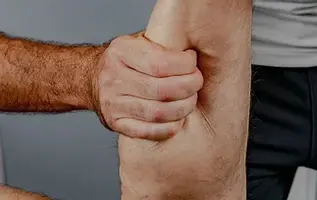
Every massage session at Physica Medica is performed by me, Dr. Maks Birikov, DPT — not a delegated therapist, not an aide. The work is clinical in intent: I assess tissue state, identify what is driving your pain or restriction, and apply technique accordingly. That is a different category of service than a spa massage, and the distinction matters.
The Distinction
Clinical Massage vs. Spa Massage — Why the Setting Changes Everything
A spa massage is a standalone service. The therapist works from a general protocol — relaxation, circulation, pressure preference — without a diagnostic framework and without continuity of care. That has its place. It is not what happens here.
At Physica Medica, massage is performed within a physical therapy evaluation and treatment model. Before I apply any manual technique, I know your injury history, your movement compensations, your tissue restrictions, and what prior treatments have and have not addressed. The massage is targeted because the assessment is specific.
The DPT credential is not incidental. It means the person doing the work can read tissue, identify referred pain patterns, recognize when a structure needs to be avoided, and integrate what they find into a broader treatment plan. A spa therapist is not trained to do that. Most massage therapists are not either.
Technique and Pressure
Deep Tissue Massage: Technique, Pressure, and What It Actually Does
Deep tissue massage works by applying sustained, directed pressure to the deeper layers of muscle and connective tissue — the structures that do not respond to lighter surface work. The goal is to release chronic muscle tension, break up adhesions in the fascia, and restore normal tissue mobility. When a muscle has been in a guarded or shortened state for months, the tissue itself changes. Deep work addresses that change mechanically.
The honest answer to 'will it hurt?' is: it depends on the tissue. Areas with significant restriction, active trigger points, or long-standing tightness will produce a sharp, pressure-sensitive sensation during treatment. That is not damage — it is the mechanical release of tissue that has been compressed or adhered. The distinction between productive therapeutic discomfort and harmful pressure is real, and I calibrate throughout the session based on your tissue response and tolerance.
Post-session soreness is common, particularly after the first one or two appointments. It typically resolves within 24 to 48 hours. Bruising is possible but uncommon with deep tissue work performed at appropriate pressure. If your tissue is highly sensitized — as it can be with fibromyalgia or widespread chronic pain — I adjust technique and pressure accordingly. More pressure is not always more effective. Precision is.
Athletic Care
Sports Massage for Athletes and Active Adults in Baltimore
Sports massage at Physica Medica is not about pre-event loosening or post-race recovery in isolation. It is about identifying the tissue and movement patterns that produce recurring injuries — and interrupting them.
Back Pain
Recurring injuries follow patterns. An IT band that keeps flaring, a hamstring that strains every season, a shoulder that never fully recovers between training cycles — these are not bad luck. They are mechanical problems with identifiable drivers: tissue restriction, compensation patterns, loading errors, or fascial adhesions that accumulate over time. Massage addresses the tissue side of that equation. When combined with the biomechanics and strength training services offered at Physica Medica, it becomes part of a complete model for athletic care.
ViewNeck Pain
I work with runners, cyclists, climbers, weightlifters, and team sport athletes. The session structure is the same regardless of sport: assess first, treat what the tissue and movement screen reveal, and build a plan that connects manual work to performance and injury prevention.
ViewSports Injuries
Recurring injuries in the IT band, hamstring, or ankle treated at the movement pattern, not the symptom.
ViewChronic Pain After Failed Treatment
Pain that has not responded to prior therapy, reassessed from the mechanism up.
ViewWho This Serves
Conditions and Goals This Service Addresses
Chronic Muscle Tension and Trigger Points
Persistent knots, ropey tissue, and referred pain patterns that have not resolved with stretching or standard PT exercise programs.
Back Pain and Neck Pain
Myofascial restriction contributing to low back pain, thoracic stiffness, neck pain, and tension headaches — including cases driven by forward head posture and desk-related postural loading.
Sciatica and Nerve-Related Pain
Soft tissue compression of neural structures producing numbness, tingling, or radiating leg pain. Massage addresses the muscular and fascial components that contribute to nerve irritation.
Sports Injuries and Recurring Strains
IT band syndrome, rotator cuff tightness, hamstring strains, and other recurring soft tissue injuries in active adults and athletes.
Scar tissue mobilization and restoration of tissue extensibility following orthopedic surgery, as part of a supervised post-surgical rehabilitation plan.
The Session
What a Session Looks Like at Physica Medica
The first session begins with a focused intake: what you are experiencing, how long it has been present, what has been tried, and what has not worked. I do a brief movement screen and tissue assessment before any hands-on work begins. That information shapes the session.