
Core Service — Lead Offering
One-on-One Physical Therapy
One provider, one patient, the entire session. I perform the assessment, the manual therapy, the exercise programming, and the re-assessment — every visit, without handoffs.
The Definition
What One-on-One Physical Therapy Actually Means at Physica Medica
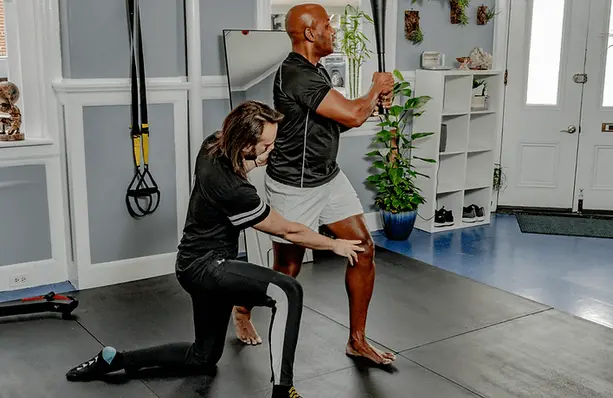
"One-on-one" is not a marketing phrase here. It is a structural description. When you book a session, you book me, a Doctor of Physical Therapy, for the full hour. I take your history. I run the movement screening. I do the hands-on treatment. I watch how your body responds and adjust the plan in the same visit.
There are no aides. No technicians supervising your exercises while I treat someone else. No shared treatment rooms with three patients on three tables. The absence of those things is not a limitation of a small practice. It is the design.
The clinical reason is simple: the information that determines your treatment lives in how your tissue and movement respond, minute to minute. If the person adjusting the plan is not the person with their hands on you, that information is lost.
The Contrast
Every Session Is with Dr. Birikov. Not a Tech or an Aide.
If you have done physical therapy before, you probably know the standard structure: roughly fifteen minutes of provider contact, exercises run by a tech, several patients scheduled into the same hour, and a plan whose length was set by an insurance authorization before anyone examined you. If it didn't work, the approach was usually why. Not you.
A session here is different in structure, not in slogan. A full hour with a DPT trained across Eastern Europe, Southwestern Asia, and North America. Manual therapy, movement analysis, and postural correction integrated into one visit, because the mechanism behind your pain doesn't divide itself into fifteen-minute slots.
Root cause is the operating principle: effective treatment requires understanding why your body is in pain, not just where. Manual therapy addresses tissue restrictions. Movement analysis finds the compensation patterns. Postural correction addresses the structural drivers that keep re-creating the problem. Separate those, and you get temporary relief. Integrate them, and you get lasting results.
Applications
Conditions Treated with One-on-One PT
One sentence each. The condition pages carry the depth.
Sports Injuries
Recurring injuries in the IT band, hamstring, or ankle treated at the movement pattern, not the symptom.
ViewChronic Pain After Failed Treatment
Pain that has not responded to prior therapy, reassessed from the mechanism up.
ViewFirst Visit
What to Expect in Your First Session
Comprehensive Assessment
Your history, in your words: what hurts, what you have tried, and what hasn't worked.
Movement Screening
I watch how you move and identify the compensation patterns loading the painful tissue.
Hands-On Evaluation
Palpation and tissue testing across fascia, joints, and neural tension to locate the mechanism.
Plan & First Treatment
I explain what I found, give you a session estimate, and treatment begins the same day.
Plan for sixty minutes. Frequency depends on the condition. Most patients start weekly, and we taper as your body holds the changes. You will know within three to five sessions whether the approach is working, and I will tell you honestly if it isn't.
Before You Book
How This Differs from Insurance-Based PT Clinics
{{ faq.a }}