
Scoliosis Treatment — Baltimore
Scoliosis Without Surgery Is Possible
If you have been told your options are a brace, surgery, or learning to live with it — that is not the complete picture. The spine is not a fixed structure. The fascia, muscles, and postural patterns that load it asymmetrically can be addressed directly, without hardware and without drugs. That is what this practice does.
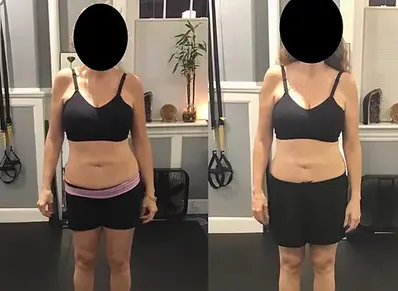
The Differentiator
Why Most Scoliosis Treatment Fails to Correct Anything
Standard physical therapy for scoliosis typically means core strengthening and postural awareness cues. Those have value. What they do not do is address the fascial asymmetry that locks the spine into its compensated position. Working the muscles without releasing the connective tissue holding the pattern in place is like trying to straighten a tree without loosening the roots.
My approach targets the fascial and postural system that is maintaining the curve — not just the muscles around it. The method I use for this is Pancafit, a proprietary postural rehabilitation system I am trained and certified in. Physica Medica is the only Pancafit provider in the United States.
The Mechanism
What Scoliosis Does to Your Body Over Time
Scoliosis is not simply a curved spine on an X-ray. It is a three-dimensional structural adaptation — rotation, lateral deviation, and altered loading — that progressively changes how every structure above and below the curve functions.
Fascial Asymmetry
The connective tissue on the compressed side of the curve shortens and adheres over time. It is not passive. It actively maintains the postural distortion, which is why stretching alone does not hold — you are working against a structural bias built into the tissue itself.
Compensatory Loading
The segments above and below the primary curve adapt to maintain a level gaze and upright posture. Those compensations create secondary curves, uneven hip loading, and asymmetric wear on joints that were never meant to carry that distribution of force.
Postural Collapse
As the thoracic cage rotates and ribs become asymmetric, breathing mechanics change. Diaphragm excursion becomes uneven. Trunk stability decreases. The result is not just cosmetic — it affects respiratory capacity, organ position, and the body's ability to generate stable movement.
Progressive Neurological Tension
In more significant curves, the spinal cord and nerve roots are placed under asymmetric tension. This contributes to the numbness, tingling, and referred pain patterns that many scoliosis patients attribute to unrelated causes — until the curve is addressed.
The Treatment
How Dr. Birikov Approaches Scoliosis Treatment in Baltimore
The first session establishes a clear picture of your curve pattern, postural compensations, and fascial restrictions. This is not a generic intake. Movement is tested, asymmetries are mapped, and the structural logic of your specific presentation is identified before any treatment begins.
Pancafit, Posture Re-Education & Fascial Rehabilitation for Scoliosis
Pancafit is a postural rehabilitation method developed in Europe and used across clinical settings internationally. It works by placing the body in precisely calibrated positions that create sustained, passive stretch along the fascial chains maintaining the postural distortion. Unlike conventional stretching, Pancafit targets the global fascial pattern — not isolated muscles — which is why it can produce structural change that exercise alone cannot. I am the only certified Pancafit provider in the United States.
Pancafit is paired with hands-on fascial work to release restrictions at specific segments, postural re-education to retrain the neuromuscular patterns that perpetuate the curve, and breathing work to restore symmetric diaphragm function. Sessions are one-on-one. There are no aides, no group classes, and no time split between patients.
Candidacy
Who Is a Candidate for Non-Surgical Scoliosis Correction?
01
Adolescent and Young Adult Curves
Curves that are still in a period of skeletal development respond most readily to postural and fascial intervention. If you or your child has been told to wait and monitor, that window is worth using actively.
02
Adults with Functional or Postural Scoliosis
Scoliosis driven primarily by postural compensation and fascial asymmetry — rather than fixed structural deformity — responds well to this approach at any age. Many adults who have carried a diagnosis for years have never had the fascial component addressed.
03
Post-Surgical or Braced Patients
Surgery corrects the bony architecture. It does not retrain the postural system or release the fascial patterns that existed before the procedure. Patients who have had spinal fusion or bracing often benefit significantly from rehabilitation that addresses what hardware cannot.
If your curve is severe, rapidly progressive, or accompanied by neurological compromise, I will tell you that directly. Non-surgical correction has real indications and real limits. The first visit establishes which category applies to you.
The first session includes a full postural and movement assessment, identification of your fascial restriction pattern, and the beginning of treatment. You will leave with a clear picture of what is driving your curve and a specific plan for addressing it.
Baltimore
Scoliosis Treatment in Baltimore — Serving Fells Point, Canton & Surrounding Areas
Physica Medica is located at 800 S Bond St in Fells Point, accessible from Canton, Federal Hill, Harbor East, and the surrounding Baltimore neighborhoods. Parking is available on-site. To schedule, call (443) 228-8029.
Common Questions
Scoliosis Treatment, Answered Directly
Can scoliosis be corrected without surgery or braces?
For many patients, yes — particularly those with functional or postural scoliosis, or structural curves that have not reached surgical thresholds. The mechanism that maintains a scoliotic curve is not purely bony; it is also fascial and neuromuscular. When those components are addressed directly through methods like Pancafit and fascial rehabilitation, measurable postural change is achievable. What this approach cannot do is reverse fixed structural deformity or replace surgical stabilization in cases of severe, progressive curves with neurological involvement. The first visit determines which situation applies to you.